



There is a huge mismatch at the heart of global health, and it’s time we address it constructively, for progress.
Consider the reality: Africa carries roughly 25% of the global disease burden, yet the continent currently generates less than 2% of the world’s research output.
As the Democratic Republic of Congo responds to recurring Ebola outbreaks, we are reminded that sub-Saharan Africa remains central to global health security. However, much of the data driving interventions, clinical trial designs, and post-outbreak analyses continues to originate from institutions based outside the region. This highlights a structural gap in how health systems and evidence generation are aligned.
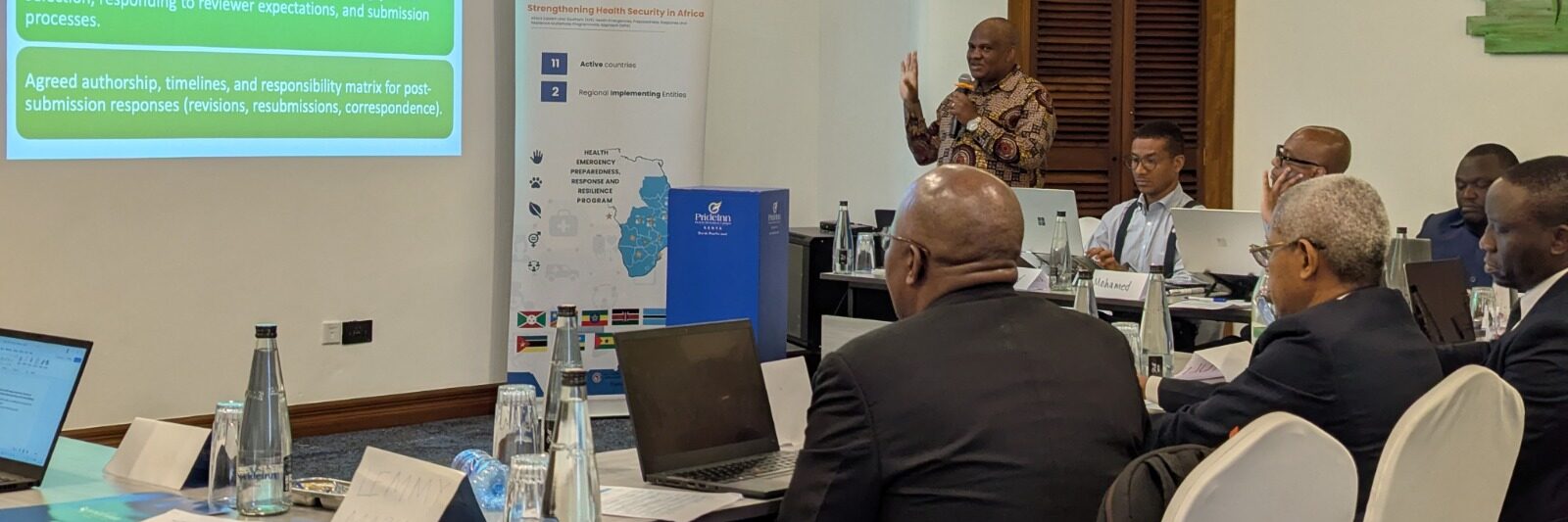
For the East, Central and Southern African Health Community region, the opportunity now in our hands is to transition from primarily serving as a data source to becoming a leading author of health research.
For decades, the region has developed brilliant, highly qualified scientists. Historically, however, external experts have often brought pre-funded protocols, conducted research on local epidemiological priorities, and published findings internationally without fully embedding capacity locally. Shifting this dynamic toward deeper collaborative ownership can better align research with regional needs.
External investments have been instrumental in advancing research and improving health outcomes across Africa. As we look ahead, greater investment in country- and region-led research agendas is essential to complement global priorities, strengthen health systems, generate locally relevant evidence, and deliver sustainable, high-impact solutions that respond to the continent’s evolving needs.
Key priorities, such as implementation research on supply chain efficiency, cross-border health surveillance during regional outbreaks, and the social, cultural, and behavioral factors influencing community engagement, require more systematic documentation. When local research priorities are formally articulated through a region-led agenda, they become visible in global literature and actionable for health authorities.
Local leadership significantly enhances the translation of evidence into policy. Ministries of Health and policy makers are far better positioned to adopt, integrate, and operationalize research findings when those recommendations are generated through local institutions and trusted collaborative frameworks. Furthermore, local leadership streamlines processes: navigating ethical clearances, obtaining community consent, and managing administrative protocols proceed more effectively under local principal investigators who thoroughly understand the operational environment.
Encouragingly, the global funding landscape is expanding. Major international partners increasingly recognize that locally anchored research yields sustainable results, creating a growing demand for country-led initiatives across sub-Saharan Africa. The current challenge is ensuring local teams are fully equipped to capitalize on these opportunities. While technical expertise is abundant, strengthening institutional experience in navigating complex grant architecture, protocol design, and multi-year financial management remains a key area for growth.
By aligning under a unified research agenda, ECSA-HC can explicitly define evidence gaps to determine whether implementation research, clinical trials, or health systems evaluations are required. This regional approach moves the focus away from isolated country efforts, building a cohesive group equipped to secure major grants while ensuring resource allocation directly supports regional laboratories, data infrastructure, and administrative systems for long-term self-reliance.
By taking a proactive role, ECSA-HC aims to support member states in identifying research needs, developing protocols, and managing resources effectively. Strengthening local research leadership provides the foundation for closing the gap between the health priorities the region manages and the scientific evidence it creates.
About the Author