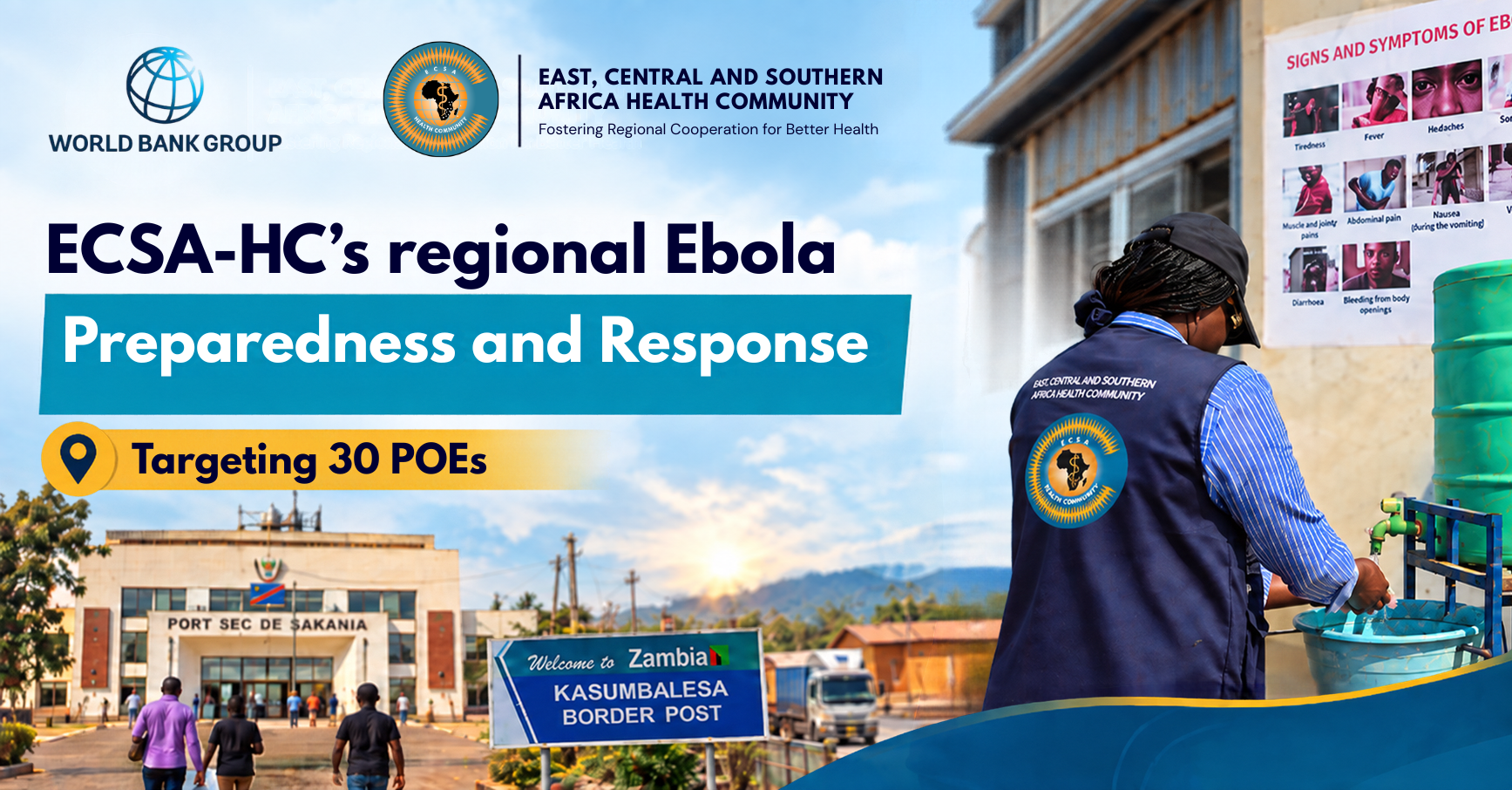
The East, Central and Southern Africa Health Community (ECSA-HC) is implementing a six-month intervention to…
Zimbabwe Conducts Joint External Evaluation to Strengthen Health Security and IHR Core Capacities
In September 2025, the Government of Zimbabwe, with technical and financial support from the East, Central and Southern Africa Health Community (ECSA-HC) and the World Health Organization (WHO), successfully conducted a Joint External Evaluation (JEE) to assess the country’s progress in implementing the International Health Regulations (IHR 2005).
The JEE, Zimbabwe’s second since joining the IHR framework, brought together national experts and international evaluators from WHO, Africa CDC, ECSA-HC, Kenya and Uganda National Public Health Institutes, IFRC, UNFPA, and other partners. Using the WHO JEE Tool version 3.0, the evaluation reviewed 19 technical areas covering prevention, detection, and response capacities, as well as points of entry, chemical, and radiation emergencies.
Key Achievements
The evaluation highlighted commendable progress in several areas of IHR implementation, including:
- Strong political commitment and legal frameworks supporting health security coordination.
- Functional national and subnational laboratories capable of timely detection of priority diseases.
- Established coordination mechanisms and surge capacity during public health emergencies.
- Competent human resources across multiple levels of government to support IHR implementation.
These gains demonstrate Zimbabwe’s resilience and commitment to global health security, particularly in the aftermath of the COVID-19 pandemic.
Areas for Strengthening
While progress was evident, the assessment identified key areas needing attention to ensure full IHR compliance:
- Enhancing multisectoral coordination and collaboration under a strengthened One Health platform.
- Digitalization of health and surveillance systems to improve data sharing and decision-making.
- Increasing domestic financing and establishing clear budget lines for IHR implementation.
- Finalizing pending legal and strategic documents to support health emergency preparedness.
- Developing a comprehensive National Action Plan for Health Security (NAPHS) to guide implementation of agreed priorities.
Cross-Cutting Priorities
The report emphasized cross-cutting actions such as integrating gender considerations into preparedness planning, building sustainable workforce capacities, and fostering stronger coordination between health, animal, environmental, and security sectors.
Way Forward
The JEE provides Zimbabwe with an updated baseline for health security performance and a framework for future investments and collaboration. The findings will inform the development of a multi-sectoral National Action Plan for Health Security, guiding the country’s next phase of implementation and monitoring of IHR core capacities.
ECSA-HC and WHO reaffirmed their continued support to Zimbabwe and other Member States in the region to strengthen preparedness and response capacities for public health emergencies, ensuring that the region is better equipped to prevent, detect, and respond to emerging threats.
Related News