




On 17 May 2026, the World Health Organization declared the Bundibugyo Ebola outbreak in the Democratic Republic of Congo and Uganda a Public Health Emergency of International Concern (PHEOIC). A day later, the Africa Centres for Disease Control and Prevention went further, declaring a public health emergency of continental security. By mid-June, the DRC had confirmed more than 780 cases and over 180 deaths, with imported cases already detected in Kampala.
For those of us who work on regional health security, the lesson is old and unforgiving that a virus does not respect a customs queue. It arrives on a bus, a fishing boat, a long-distance truck. The question is never whether pathogens will reach our borders. It is whether we will recognise them when they do. For most of Africa, the honest answer has been: not quickly enough.
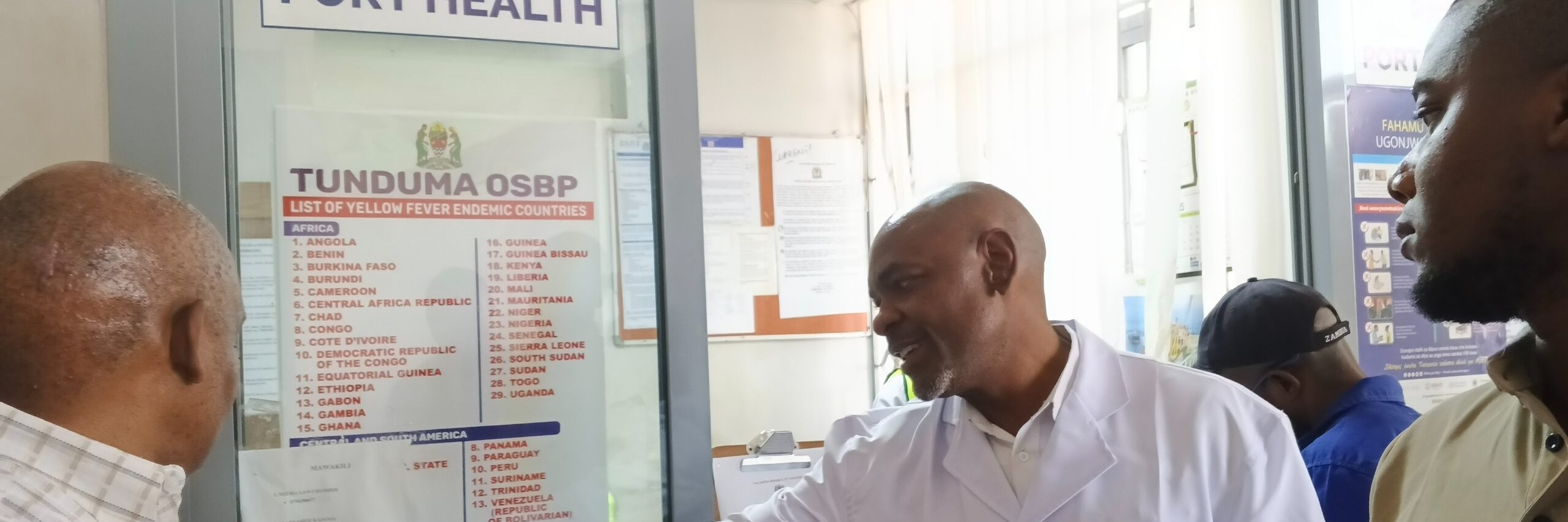
For years, travellers were screened on paper. A clipboard cannot search itself. It cannot raise an alarm. It cannot tell a surveillance officer in a capital city that three travellers from the same district arrived feverish in a single afternoon. By the time a paper form becomes useful intelligence, the traveller is long gone, and so, sometimes, is the chance to contain an outbreak.
So our region changed it. At the East, Central and Southern Africa Health Community, under the World Bank-financed Health Emergency Preparedness, Response and Resilience programme, a one-billion-dollar regional investment launched in 2024, we engineered a digital point-of-entry screening platform to replace paper. It is no longer a pilot. Rwanda has screened roughly 1.5 million travellers. Zambia now runs it at points of entry nationwide.
Uganda screened more than 20,000 in the weeks after upgrading the system this May, as Ebola crossed its border. Standardised data are captured once and flow straight into national surveillance. The platform carries an artificial-intelligence layer that flags travellers who may pose a risk. But we engineered it on one non-negotiable principle: no black boxes. Every alert is traceable to the recorded symptoms, exposure and travel history that produced it. Every change to a disease rule is authorised and logged. Every recommendation can be overridden by a trained public-health officer. The machine advises; a human decides. This matters across the continent.
The amended International Health Regulations, in force since September 2025, oblige every member state to operationalise core capacities at designated points of entry. Ministries will now be tempted to buy whatever screening software a vendor is selling. That would be a mistake. An opaque algorithm that cannot explain why it flagged a traveller is not a safety tool; it is a liability in an outbreak, when a wrong call means either an unjust detention or a missed case that seeds the next wave.
Africa should set its own standard, resting on three principles. Screening must be explainable, so that officers and citizens can see the reasoning behind a decision. It must be sovereign, with each country holding and governing its own traveller data rather than surrendering it to a foreign server. And it must be interoperable, so that an alert raised at a Zambian border can be understood in Kinshasa or Kampala without anyone faxing a form. None of this is theoretical. It is running now, screening real travellers, during a real emergency, in the region that borders the outbreak. The technology is not the hard part. The hard part is the decision to treat border health as critical national infrastructure, funded and staffed accordingly, rather than as a desk with a thermometer that is remembered only when the next epidemic is already inside the gates.
The continent that endured COVID-19 knows the cost of seeing late. It cannot keep meeting each new pathogen with a clipboard and a guess. Africa CDC, the African Union and member states should make digital, explainable, sovereign traveller screening the continental norm, embedded in every national preparedness strategy, not an emergency improvisation reached for after the first funeral.
We built this before this outbreak, not because of it. That is the difference between preparedness and reaction, and it is measured in lives. The rest of the continent still has a choice about which path to take. The virus in eastern DRC will not wait while we decide.
About the Author