



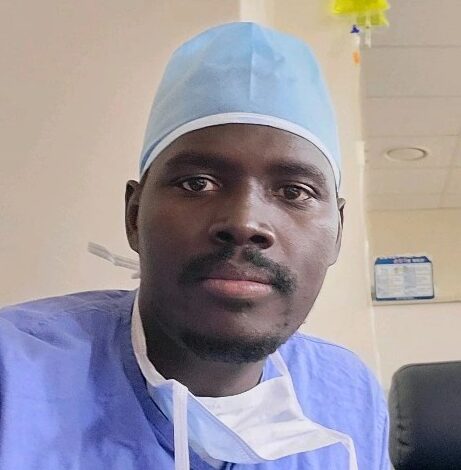
I am at Masaka Regional Referral Hospital in Uganda, where I have witnessed the faces of parents who have traveled too far with too little, desperately seeking healthcare for their children. For these families, the distance to our facility is measured not just in kilometers, but in the harrowing realization that even upon arrival, the specialized surgery required to save a life might be out of reach. As a consultant surgeon here for the past five years, I have stood beside parents whose joy of childbirth is suddenly eclipsed when they discover a congenital malformation—such as a baby born without a functional anus, a condition known as anorectal malformation.
The parents realize quickly that the baby is breastfeeding but not passing stool. As the abdomen begins to swell, a cold dread sets in. Most of these families live in remote villages, far from the specialized care they need. The journey to reach us is long, expensive, and physically exhausting.
When they finally reach Masaka, we do what we can. We serve a population of around two million people across 12 districts in South Central Uganda. As a regional referral hospital, we provide the initial emergency care, resuscitation and the creation of a temporary stoma to save the child’s life. But then, we hit a wall. Because we lack resident pediatric surgeons, these patients must be referred again to the national referral hospital over 100 kilometres away in Kampala.
This is where the system often breaks. For a struggling family, adding another journey and the complexity of navigating a distant, crowded national center is often too much. I have seen parents look at the road ahead and simply decide to go back home. They feel it is better for the baby to die in the village than to endure the impossible hurdles of seeking care they cannot afford. This is the “surgical gap” in its most heartbreaking form where a treatable condition becomes a terminal one due to local capacity challenges.
However, a new narrative is being written in Masaka this week, one that points to a future of equitable healthcare across Africa.
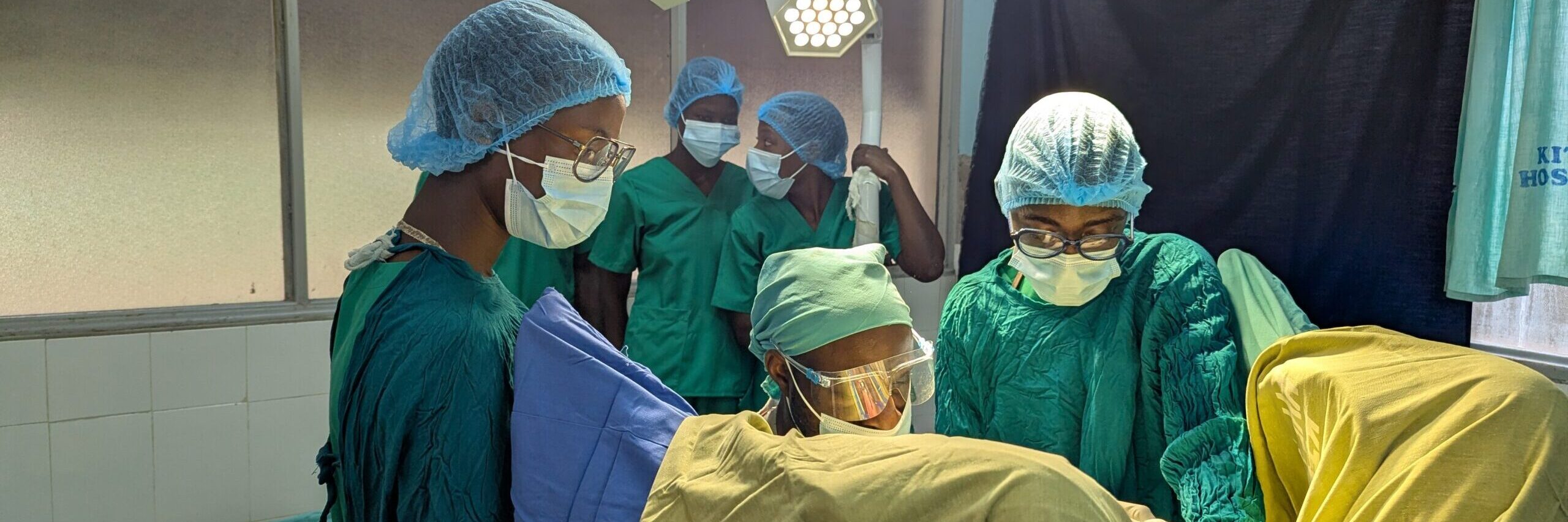
Currently, the Ministry of Health Uganda is collaborating with the East, Central and Southern African (ECSA) Health Community and ECSA Colleges. This initiative has brought specialist surgeons to Masaka Regional Referral Hospital and St. Joseph Hospital Kitovu. For an entire week, we have been busier. We are performing repairs of obstetric fistula (VVF) and a wide range of procedures for children and adults, including splenectomies, hernia repairs, and complex urological surgeries.
This is not an isolated event; it is a manifestation of what we can truly refer to as Real African Solidarity. A similar initiative is simultaneously happening in Lesotho, Southern Africa, where ECSA has also partnered with the Ministry of Health. By mobilizing specialists at a regional level and bringing them directly to local hospitals, we are witnessing a catalyst for change that is both diplomatic and deeply practical.
A baby with an anorectal malformation who previously faced a perilous and likely aborted referral to the capital is now receiving definitive corrective surgery right here in Masaka. By performing the posterior sagittal anorectoplasty locally, our visiting specialists ensure the child can lead a normal life.
We have booked 20 high-priority cases for this camp alone, and more continue to arrive at our daily outpatient clinics. With roughly 11 percent of our population needing surgical care, the presence of such a camp is a “very big deal” for the community. It proves that the backlog of “desperate patients” is not a permanent fate, but a challenge that can be overcome with the right mobilization.
Transfer of Skills
Perhaps more importantly, this initiative is about the transfer of skills. Most surgeons in regional referral hospitals are general surgeons. While we manage a vast array of conditions, we are not always technical experts in the highly specialized areas of pediatric or thoracic surgery.
Having specialists operate alongside us creates a high-level training environment. It “opens our eyes” to the intricacies of these procedures and allows us to advocate for the permanent placement of such specialists in regional settings. When the camp ends, the technical knowledge remains with the surgeons on the ground, empowering us to help the next patient who walks through our doors.
Catalyst for Equitable Health
This regional solidarity, if scaled, offers a blueprint for addressing the surgical crisis across the continent. If the ECSA region continues to facilitate this movement of experts across borders to support one another, we can bring relief to communities that have been suffering in silence.
The hospital where I work is a regional power, yet for too long, the surgical weight of two million people has rested on too few shoulders. Currently, I am joined by only two other surgeons who recently finished their studies. We are primarily responsible for the surgical needs of an entire region. A surgical camp like this doesn’t just provide procedures; it provides a vision of what a functional, integrated African health system looks like.
As I watch our teams work, I am reminded that healthcare equity is not merely about buildings or equipment; it is about the movement of expertise and the ethics of proximity. When surgeons from across the East, Central, and Southern African region come together to treat a child in a Masaka village, they are doing more than just operating. They are proving that through solidarity, we can ensure that a child’s place of birth no longer determines their chance at a healthy life.
About the Author