




Where do viruses go when they are not causing havoc or dominating front-page headlines?
When an outbreak fades and immediate public panic subsides, a dangerous illusion of safety usually settles over our communities. This is the moment when an active health crisis disappears, and for many, it could seem like an invitation to relax, but far from it. In reality, this epidemiological “peacetime” is not a period for resting. It’s rather the most critical window to prepare and strengthen our collective defenses against outbreaks. Why am I pointing this out at this time?
Across our region, this cycle of panic and neglect threatens to leave our health systems vulnerable to the next disease threat.
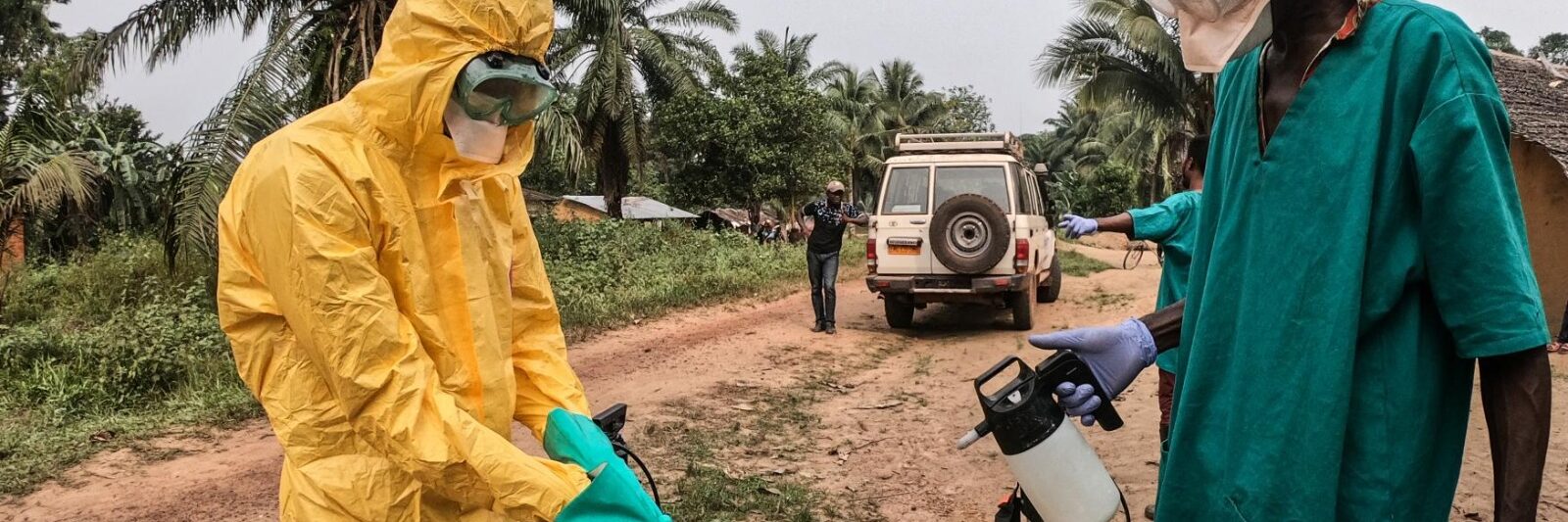
We have recently watched the escalation of an Ebola outbreak in the Democratic Republic of Congo (DRC) and its rapid, predictable spillover into Uganda. Compounding this regional threat are reports of Hantavirus that recently hit the MV Hondius, a polar expedition cruise ship that traveled from Argentina across the Atlantic. The outbreak left 3 people dead (a Dutch couple and a German passenger) and sickened over 10 others.
This is a reminder that public health threats are diverse, unpredictable, and entirely indifferent to our timelines, and these developments remind us of the truth we have repeated for decades that diseases do not respect borders but our health systems still do.
At the borders
Viruses that cause these outbreaks usually travel on the backs of routine human interaction. The rapid movement of Ebola from the DRC to Uganda demonstrates how quickly an outbreak can cross lines on a map due to the vibrant, unstoppable cross-border trade and social interactions that define the East, Central, and Southern African regions.
To stop an outbreak from expanding into a catastrophic regional crisis, sub-national and national systems are no longer enough. We must build and sustain strongly connected regional systems. This requires two non-negotiable foundations, the joint response mechanisms and real-time data-sharing platforms. If a health facility in a neighboring country cannot immediately see the data of an emerging cluster across the border, our regional response will always be steps behind the virus.
Nowhere is this gap more apparent than at our Points of Entry (POEs), such as the airports, land crossings, and ports that serve as our primary shields. Under the World Health Organization’s International Health Regulations (IHR), a fully functional POE must maintain three core capacities:
- The capacity to coordinate and communicate effectively.
- The capacity to manage routine public health functions.
- The capacity to respond to emergencies that arise.
Historically, our assessments across the region have revealed health systems are often better at temporarily mobilizing emergency capacities during a crisis than they are at maintaining routine capacities during peace time. This is unsustainable. A point of entry cannot optimally detect, prevent, and respond if its baseline operations are underfunded and neglected until a crisis strikes.
When there is no outbreak
What does proactive preparation actually look like when there is no outbreak?
During peace times, the most vital intervention is the execution of rigorous, strategic risk assessments at our borders. These assessments predict potential biological hazards and establish baseline risk levels long before a virus arrives. From these insights, we develop comprehensive Emergency Contingency Plans. These plans map out exactly who responds, how isolation protocols are triggered, and how communication flows the moment a hazard materializes.
At the East, Central and Southern Africa Health Community (ECSA-HC), we have systematically supported numerous POEs across our member states to conduct these strategic risk assessments and draft their contingency plans.
Currently, as Ebola and Hantavirus threaten our borders, well-prepared countries are not scrambling to invent a response; they are simply activating and testing existing plans. They are reviewing roles, validating supply chains, and ensuring their systems are aligned to contain the threat. Peace-time planning transforms panic into a structured, clinical execution.
To institutionalize this philosophy of continuous readiness, the ECSA Health Community is driving regional health security through the World Bank-funded Health Emergency Preparedness, Response and Resilience Program (HEPRRP). This multi-country initiative shifts the region from reactive firefighting to proactive resilience by targeting three integrated pillars: upgrading national laboratories and workforce capabilities to withstand epidemic shocks, enhancing digital cross-border disease surveillance and diagnostic tools at Points of Entry (POEs) for early pathogen detection, and maintaining a coordinated regional framework to keep member states working in lockstep with international health standards.
The HEPRRP includes the Contingent Emergency Response Component (CERC). The CERC acts as a vital financial and technical safety valve. In an emergency, this mechanism allows for the rapid reallocation of project funds and immediate deployment of ECSA-HC’s technical expertise directly to countries facing imminent threats, ensuring that financial bottlenecks do not delay life-saving interventions.
We must keep vigilance
Health security is not solely the responsibility of ministries, border officials, or regional bodies like ECSA-HC. It demands collective vigilance from every layer of society.
For individuals traveling across the region, adhering strictly to updated travel advisories and practicing rigorous infection prevention and control (IPC) procedures is vital. For citizens living far from national borders who believe they are safe from an outbreak in a neighboring state, my warning is- that proximity is an illusion.
Uganda and the DRC are our immediate neighbors. Our economies and families are deeply intertwined. Even if a community or a nation has never experienced an Ebola outbreak in its history, we must step up our vigilance and surveillance systems. We cannot stop the movement of people, nor should we, but we must harden our surveillance so that we are never caught off guard.
Let us use this time wisely to fund, build, and connect our systems and ensure that when the next virus knocks on our borders, it finds us waiting, prepared, and unbreakable.
About the Author