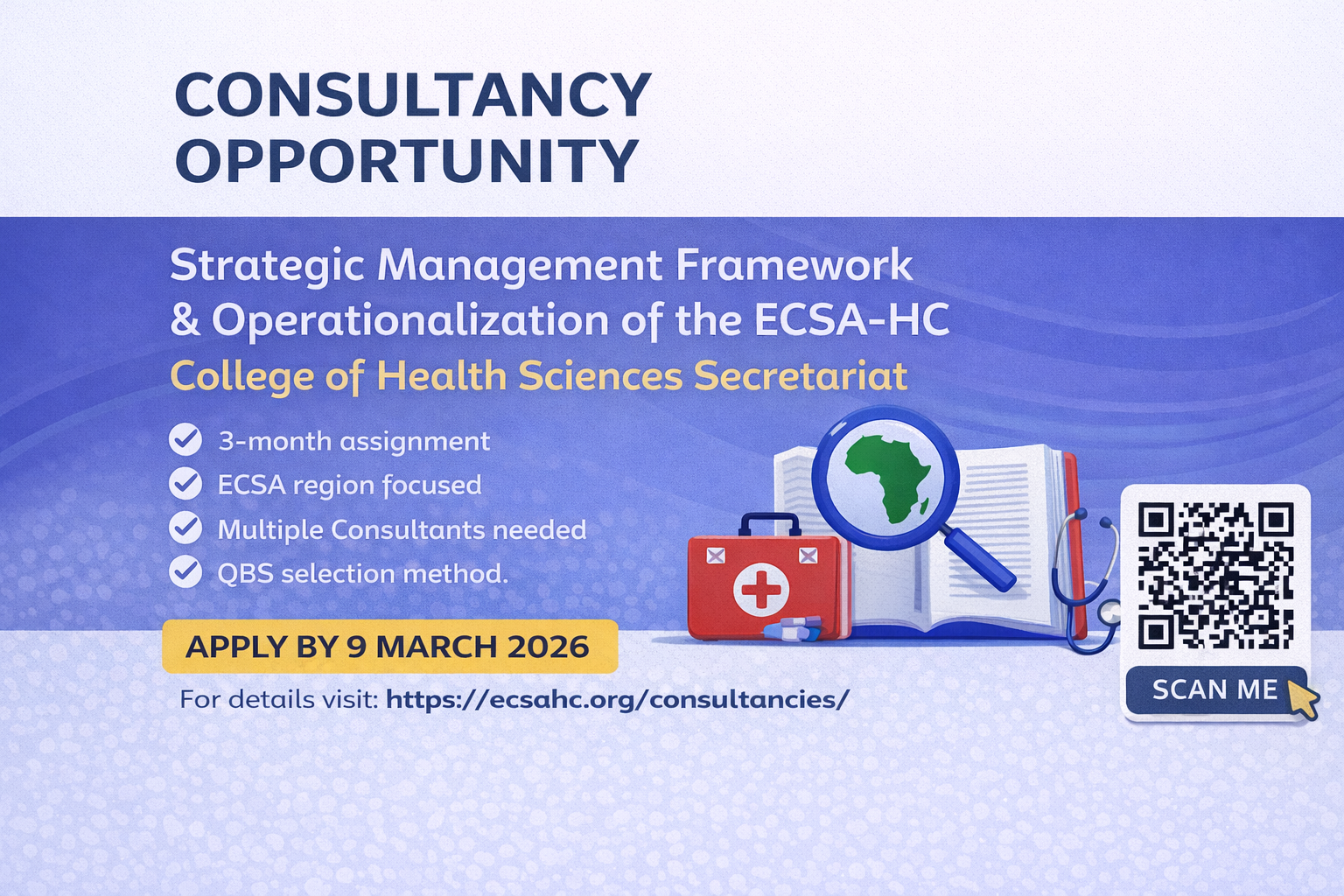
The East, Central and Southern Africa Health Community (ECSA-HC) is pleased to announce a consultancy…
From Potential to Power: Young Africans Step Forward to Shape the Continent’s Future
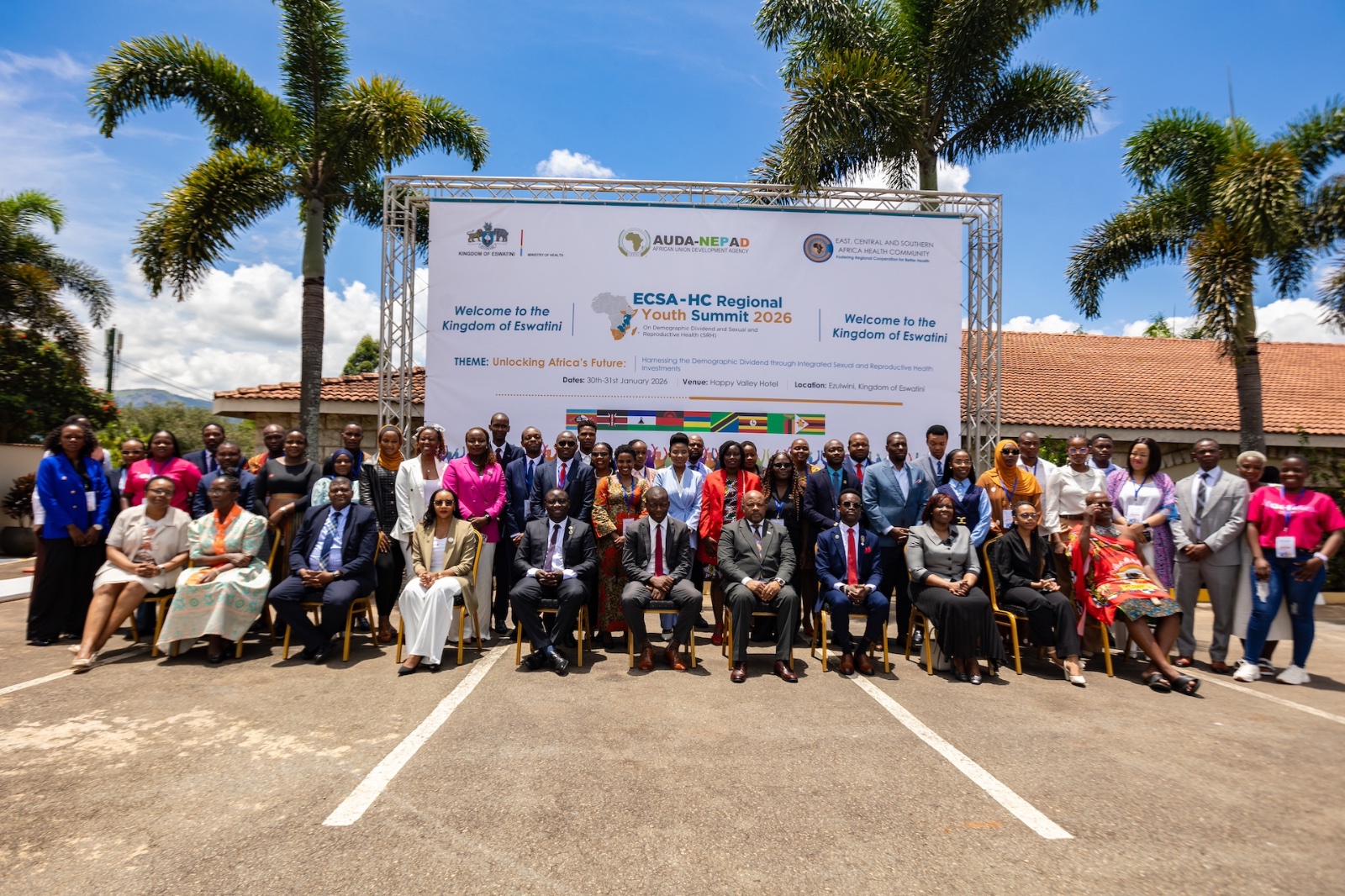
The East, Central, and Southern Africa Health Community (ECSA-HC) is holding the first-ever Regional Youth Summit on the Demographic Dividend and Sexual and Reproductive Health in Ezulwini from 30–31 January 2026, in the Kingdom of Eswatini. The Summit brings together young leaders, policymakers, development partners, and regional institutions from across East, Central, and Southern Africa to advance dialogue and action on youth health, rights, and Africa’s demographic future.
Held under the theme “Advancing Sexual and Reproductive Health to Unlock Africa’s Demographic Dividend,” the Summit comes at a defining moment for the continent, where more than 60 percent of the population is under the age of 25. While this youthful population presents a historic opportunity for economic growth and social transformation, leaders at the Summit emphasized that the dividend is not automatic and requires deliberate investment, policy coherence, and accountability.
The Summit, which is funded by AUDA–NEPAD, was officially opened by the Guest of Honour, Hon. Bongani Nzima (MP), Minister of Sports, Culture and Youth Affairs of the Kingdom of Eswatini. In his remarks, he underscored the urgency of investing in young people, particularly in sexual and reproductive health and rights (SRHR).
“Africa’s demographic dividend is not automatic. It requires deliberate, targeted, and sustained investment in young people—particularly in sexual and reproductive health, education, and life skills so that this opportunity becomes a driver of growth, not a burden,” he said.
Hon. Nzima highlighted persistent regional challenges, including high adolescent pregnancy rates, unmet need for contraception, limited access to youth-friendly SRH services, and weak accountability mechanisms. Drawing from Eswatini’s experience, he showcased innovative, youth-centred interventions such as the TuneMe digital platform, Life Skills Education programmes, and youth economic empowerment initiatives that integrate SRH, mental well-being, and livelihoods.
Earlier, in welcoming delegates to this first-ever ECSA-HC Regional Youth Summit on SRH and the Demographic Dividend, Dr. Ntuli Kapologwe, Director General of ECSA-HC, emphasized that young people are not merely beneficiaries of development but essential partners in shaping and delivering solutions.
“You are not just the future of Africa—you are the present,” Dr. Kapologwe told participants. “Unlocking the demographic dividend begins with protecting young people’s health, rights, and voices, and ensuring they are partners in decision-making and implementation.”
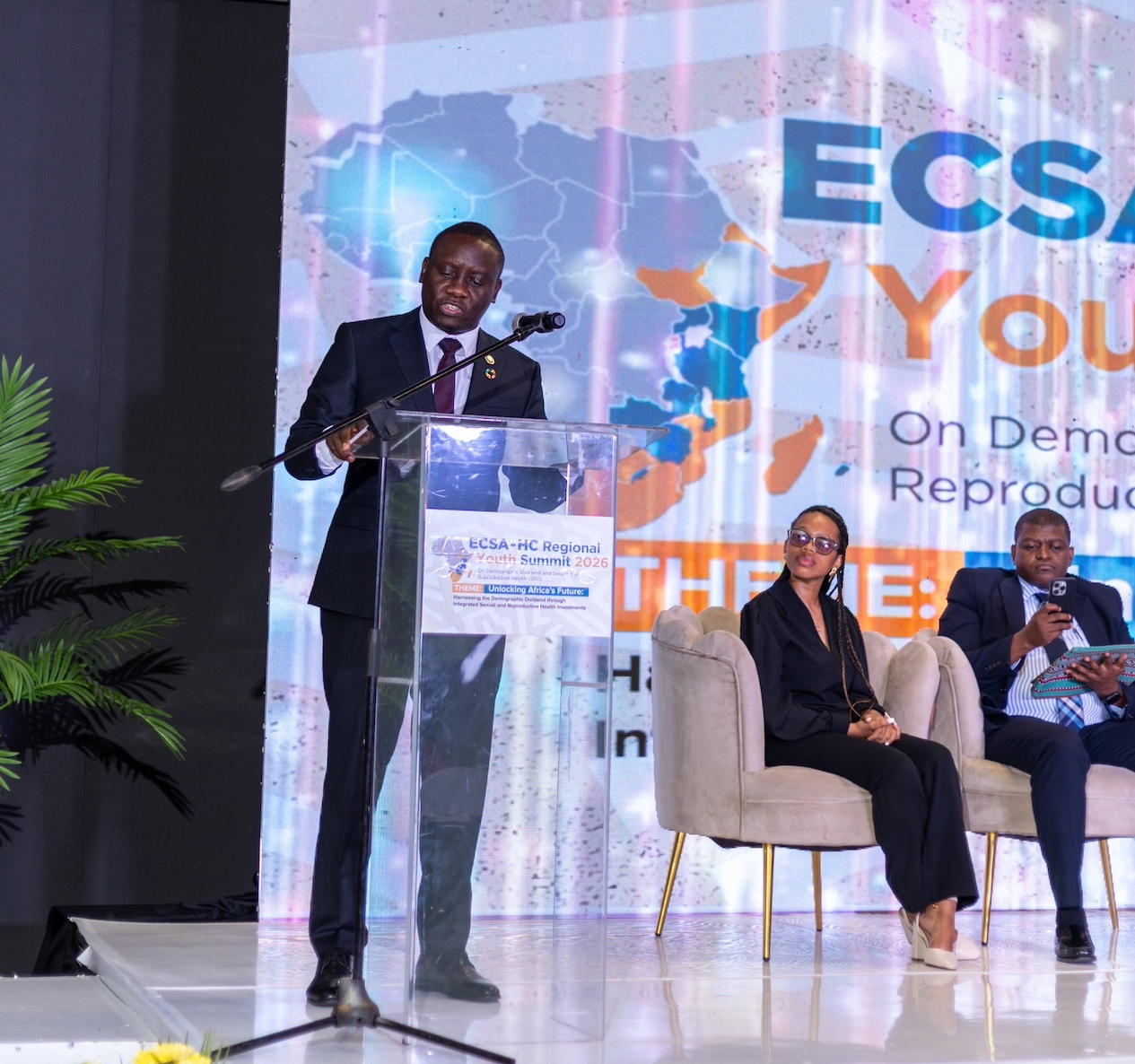
Dr. Kapologwe noted that Africa’s youthful population is its greatest strategic asset, but warned that without integrated, youth-responsive sexual and reproductive health systems, the promise of the demographic dividend could quickly become a burden. He called for a shift from policy commitments to measurable impact, urging governments and partners to prioritize implementation, accountability, and sustained financing.
A powerful youth voice was brought to the forefront by Shawn Dalmas, youth representative and CEO of Dalmas Creations, who challenged leaders to move beyond symbolic youth engagement.
“Young people are consulted, invited to speak, but rarely entrusted with implementation and accountability,” he said. “This is not a failure of intention; it is a failure of systems design.”
Dalmas proposed concrete mechanisms, including youth-led SRH implementation units within government systems, ring-fenced financing for youth-led delivery, youth accountability scorecards, and a regional youth action and delivery platform to ensure commitments translate into real community-level outcomes.
Representing continental leadership, Mr. Linton Mchunu of AUDA–NEPAD reaffirmed the African Union’s commitment to placing young people at the centre of Africa’s development agenda. He emphasized that sexual and reproductive health is foundational to education, productivity, dignity, and inclusive growth.
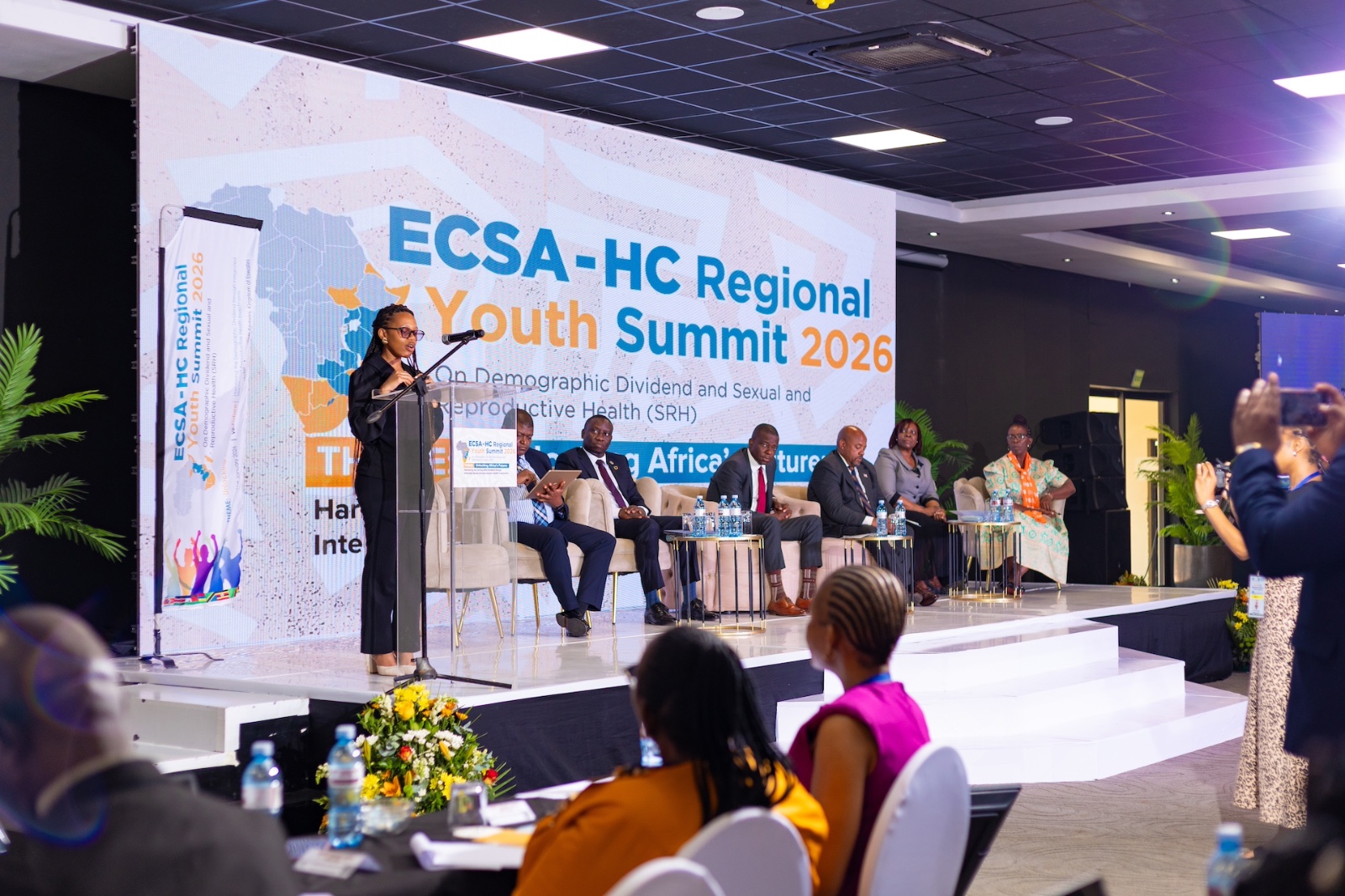
“The demographic dividend is not a promise it is a responsibility,” he said. “Whether this youth bulge becomes Africa’s greatest dividend or its greatest challenge depends on the choices we make today.”
Mr. Mchunu highlighted AUDA–NEPAD’s flagship Africa Demographic Dividend and Sexual and Reproductive Health (A2DSRH) Programme, which is investing in harmonized policies, sustainable financing, and youth-friendly health systems across the continent.
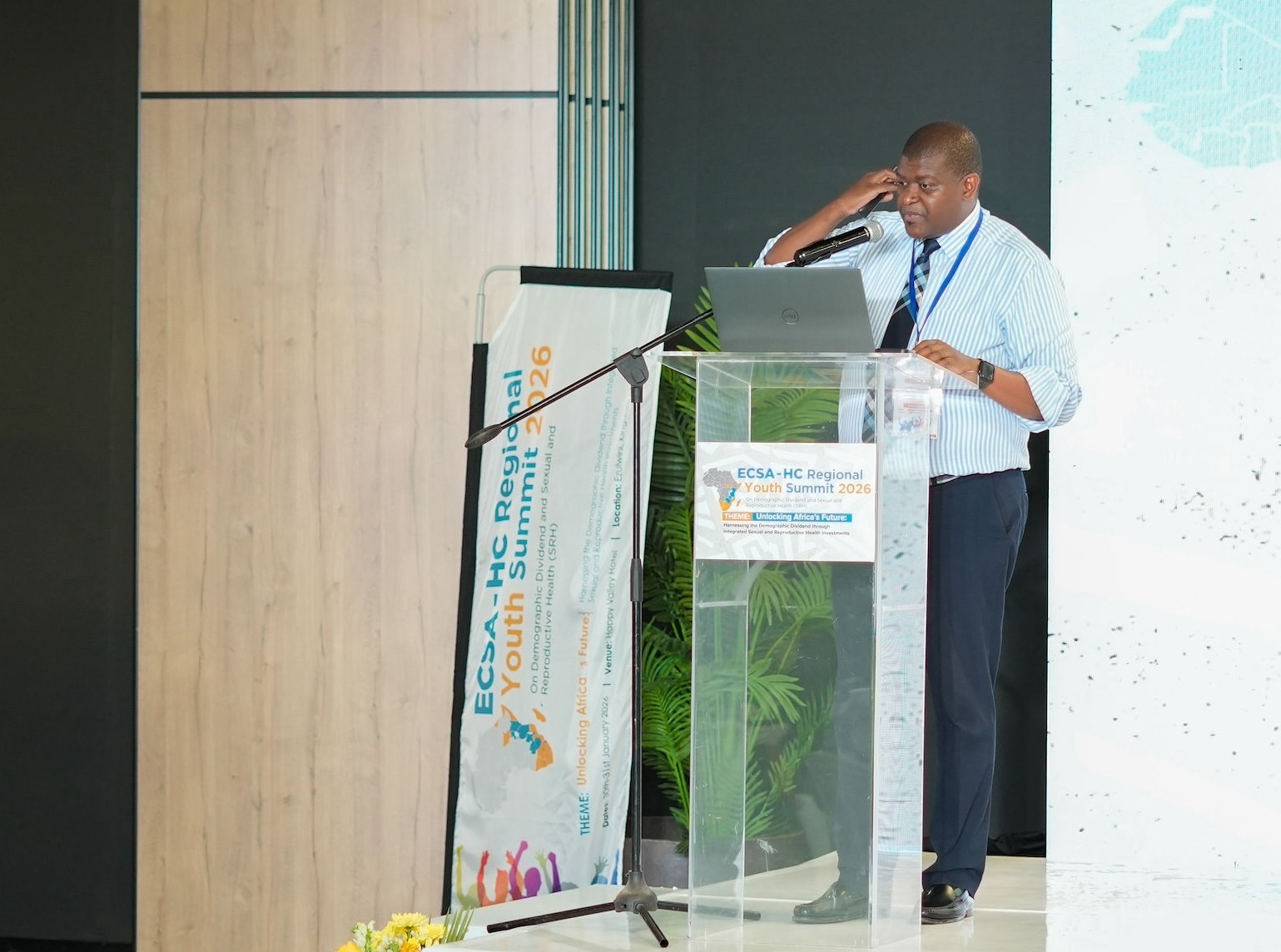
As discussions continue, the Summit is setting the tone for bold dialogue, regional collaboration, and concrete commitments aimed at placing young people at the centre of Africa’s health and development agenda. The Summit is expected to conclude on Saturday, 31 January 2026, with delegates adopting a Youth Summit Declaration that will inform regional and national policy processes, including the upcoming ECSA-HC Health Ministers Conference scheduled for 3–5 February 2026.
Related News