TERMS OF REFERENCE Technical Expert for Regional South-to-South Learning and Innovation Adoption NEST360…
Permanent Secretaries from 12 Member Countries Convene to Formalize Cross-Border Collaboration for Health Security
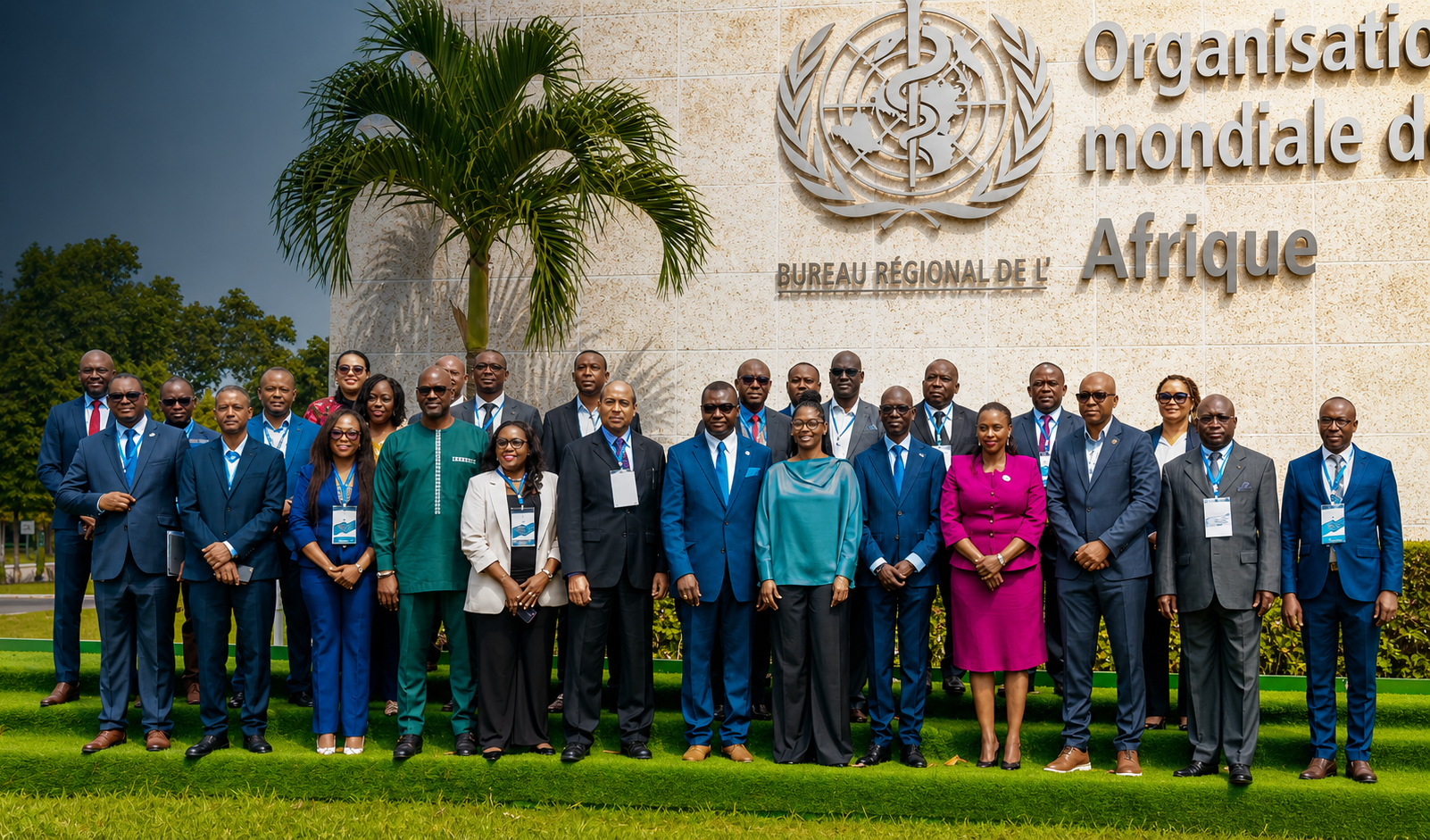
BRAZZAVILLE, Republic of Congo – Permanent Secretaries from across East, Central, and Southern Africa have converged at the World Health Organisation Regional Office for Africa (WHO AFRO) for a consultative meeting that formalizes a framework for cross-border health security, a decisive move to strengthen regional efforts against infectious diseases.
The two-day Consultative Meeting of Permanent Secretaries on Cross-Border Collaboration for Health Security, which commenced on May 4, 2026, serves as a high-level policy forum to refine and build consensus on a proposed Memorandum of Understanding (MoU). This agreement aims to institutionalize technical cooperation, joint surveillance, and rapid response mechanisms among twelve key Member States including Angola, Burundi, Central African Republic, Congo, Democratic Republic of Congo, Ethiopia, Kenya, Rwanda, South Sudan, Tanzania, Uganda, and Zambia.
The meeting, officiated by the Regional Director for WHO African Region Professor Mohamed Yakub Janabi and supported by AfricaCDC the WorldBank, and ECSA Health Community through the Health Emergency Preparedness Response and Resilience Program(HEPRRP), comes at a critical time as the region continues to manage the complexities of the Mpox outbreak alongside threats from Cholera, Ebola, and other Viral Hemorrhagic Fevers. While national capacities have strengthened significantly under the International Health Regulations (IHR 2005), significant operational gaps remain at the borders where pathogens frequently travel undetected.
Delivering opening remarks on behalf of the East, Central and Southern Africa Health Community (ECSA-HC), Dr. Mohamed Mohamed, Senior Medical Epidemiologist and Project Coordinator for the Health Emergency Preparedness, Response and Resilience (HEPRR) Program, called for unified action.
Public health emergencies do not respect national borders,” Dr. Mohamed stated. “Recent outbreaks of cholera, Ebola, Mpox, and other viral haemorrhagic fevers have clearly shown that health security is both a national and regional responsibility. While Member States have made significant progress in strengthening national capacities, gaps remain in cross-border surveillance, data sharing, joint preparedness planning, rapid response coordination, logistics, and sustainable financing.
The proposed MoU, supported by a strategic partnership between the World Bank, Africa CDC, and WHO AFRO, provides the legal and operational architecture needed for this unified continental response. Key pillars of the framework focus on harmonizing data collection and real-time information sharing to detect threats before they spread, while also strengthening multisectoral collaboration between human and animal health sectors through the One Health approach. Furthermore, the agreement seeks to align immunization strategies and case management procedures while facilitating the cross-border deployment of public health specialists and ensuring free-of-charge customs clearance for emergency medical materials. This comprehensive approach is designed to eliminate the administrative and logistical barriers that often hinder rapid response during the “golden hour” of an outbreak.
As the secretariat supporting the participation of five specific project countries, Angola, Burundi, Kenya, Malawi, and Zambia, the ECSA Health Community highlighted the absolute necessity of political ownership in making these technical agreements functional.
Dr. Mohamed addressed the convened Permanent Secretaries directly, stating that their leadership is critical in ensuring the proposed MoU reflects actual country priorities, legal requirements, and institutional realities. He explained that their high-level guidance is the catalyst required to move this process from technical discussion to formal endorsement and practical operationalization on the ground.
The consultative meeting is expected to produce a validated draft of the MoU and a clear, time-bound implementation roadmap for the region. Following these deliberations, the document will be submitted for formal ministerial endorsement, setting the stage for an initial five-year period of intensive regional cooperation.
Related News