




Antimicrobial Resistance (AMR) is often described as a “silent pandemic,” but for those of us on the front lines in East Africa, this silence is breaking. The resistant microorganisms have been taking advantage of our porous borders, from the busy trade hub at the Moyale border to the shared grazing lands where pastoralist communities move their livestock between Kenya and Ethiopia. These resistant pathogens have learned to defeat the very drugs designed to kill them, and they do not carry passports. They do not recognize our countries’ sovereignty. They move through international travel, the trade of live animals, and the shared water sources of our border towns.
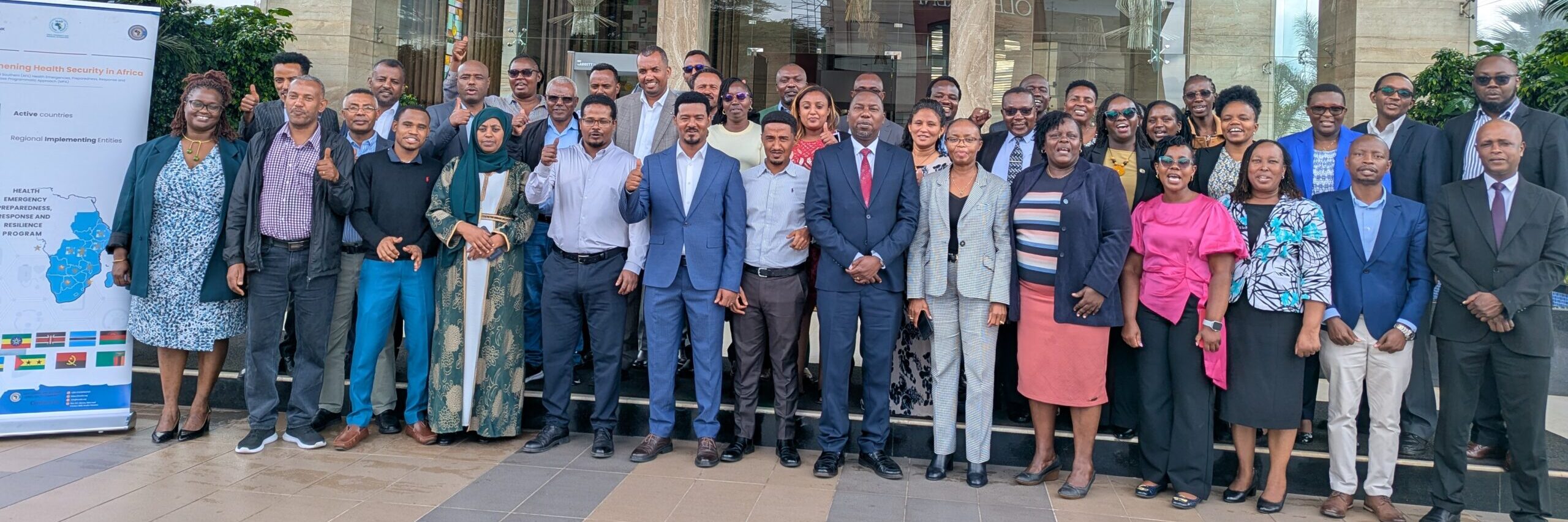
Kenya is not an island, and neither is Ethiopia. Recognizing this, a high-level delegation from the Federal Democratic Republic of Ethiopia recently concluded a strategic high-level benchmarking visit to Kenya (April 13–17, 2026). This was not merely a diplomatic courtesy; I can call it a strategic public health intervention and I will be right. As Kenyan counterparts, we opened our doors to share the successes and scars of Kenya’s journey in establishing a One Health AMR Surveillance System (OHAMRS). By this, now I realise that we were building a regional defence mechanism against a common enemy: AMR
Scale of the Crisis
According to the GRAM (Global Research on Antimicrobial Resistance) report, AMR was associated with nearly 5 million deaths globally in 2019, with the highest burden falling on sub-Saharan Africa. In our region, the misuse of antibiotics is not limited to human health clinics and hospitals. Both Kenya and Ethiopia have some of the largest livestock populations on the continent. In many pastoralist settings, antimicrobials are often administered without professional veterinary supervision.
“When a pastoralist in a remote border region treats a cow with inappropriate antibiotics, the resulting multi-drug resistant organisms (MDROs) can enter the food chain or spread to humans through direct contact. This doesn't just threaten local public health; it jeopardizes international trade and regional food security.”
Lessons from Kenya
Kenya’s progress in AMR surveillance was not built overnight. It began in 2017 with two pioneer sentinel sites: one of them, Thika Level 5 Hospital. At the time, we faced hurdles some of which may be facing Ethiopia today: fragmented AMR data, manual record-keeping, and a lack of consistent reagents.
Today, that system has expanded to 32 sites across both human and animal health sectors. We have moved from manual logs to a sophisticated National AMR Data Repository, The Central Data Warehouse (CDW) and Dashboard. This “One Health” approach integrates data from the Ministry of Health and the Ministry of Agriculture, providing a real-time snapshot of resistance patterns that allows for evidence-based policy action. Already plans are in motion to incorporate data from the environment sector.
During the visit, the Ethiopian delegation, under the World Bank-supported Health Emergency Preparedness, Response and Resilience Project (HEPRRP) implemented by ECSA Health Community witnessed more than a technical system, they experienced the power of regional learning in action. From a laboratory bench in Thika to a national dashboard, they saw how data can be transformed into evidence for decision-making, accountability, and better outcomes. This is the heart of the regional learning agenda: enabling countries to learn from each other’s lived experience, adapt practical solutions, and turn knowledge into action. In public health, transparency matters. Without data, we are fighting a war in the dark. With it, clinicians can know which medicines still work, policymakers can target scarce resources more wisely, and countries can accelerate progress not in isolation, but through shared regional learning and solidarity.
The Power of Peer Learning
The core of this collaboration is the understanding that we face similar socio-economic landscapes. Ethiopia is currently working to develop its own National One Health AMR Dashboard. Rather than looking to the Global North for models that may not fit our devolved governance structures, Ethiopia looked to Kenya.
We discussed the “how-to” of multisectoral coordination? specifically how our National Antimicrobial Stewardship Interagency Committee (NASIC) brings disparate departments together. We also shared the realities of implementation in a devolved system. In Kenya, health is a county-level responsibility. This means coordination requires a delicate balance between national standards and sub-national execution, a challenge Ethiopia also navigates within its federalist structure.
Addressing the Gaps
Despite our progress, the benchmarking visit also highlighted barriers we still have to surmount. Community access to antibiotics remains a “wild west” in many regions. Regulation and enforcement are still weak, and public awareness of the dangers of self-medication is low.
Furthermore, the international funding landscape for AMR is dwindling. As global priorities shift, regional partnerships become our best hope for sustainability. We must move away from a reliance on external aid and toward a model of shared regional public goods. By standardizing indicators and metadata across ECSA-HC (East, Central and Southern Africa Health Community) member states, we can create a regional surveillance network that allows us to spot emerging resistance trends before they become cross-border disasters.
A Roadmap for the Future
The visit culminated in the co-design of a draft Ethiopian One-Health AMR Dashboard Roadmap. This document isn’t just a technical plan; it is a declaration of intent. It outlines how Ethiopia will harmonize its indicators, integrate animal health data, and move from fragmented surveillance to a unified digital system.
The AMR crisis is too large for any one nation to tackle alone. When a resistant strain of Klebsiella or E. coli develops in one country, it is only a matter of time before it arrives in the next. Our security lies in our neighbor’s strength. Ethiopia’s visit to Kenya was more than a study tour; it was a blueprint for a safer, more resilient Eastern, Central and Southern Africa.
About the Author