The East, Central and Southern Africa Health Community (ECSA-HC) is implementing a six-month intervention to…
ECSA-HC Strengthens Regional Capacity through Training on Early Action Review Using the 7-1-7 Approach
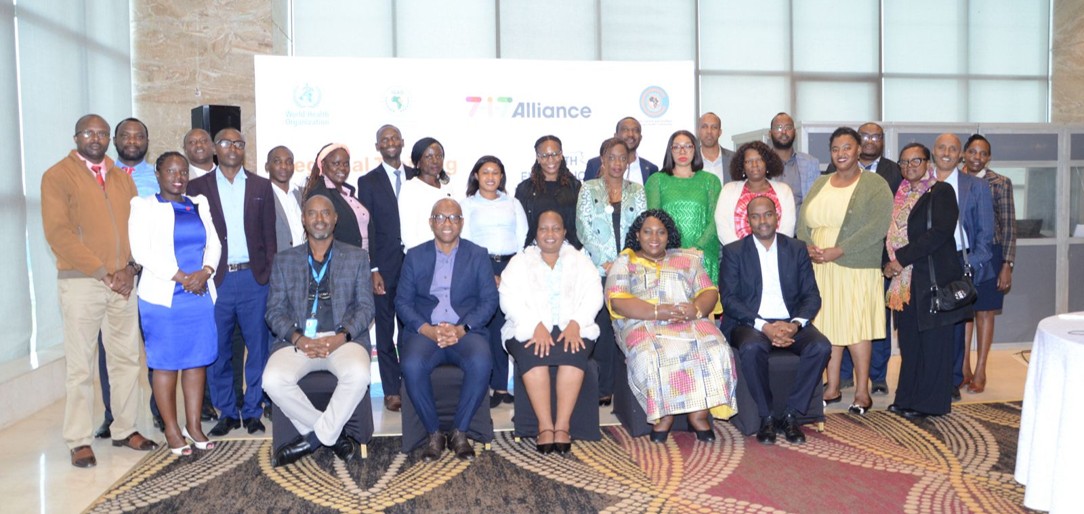
The East, Central and Southern Africa Health Community (ECSA-HC), in collaboration with the World Health Organization (WHO), the Intergovernmental Authority on Development (IGAD), and Resolve to Save Lives (RTSL), convened a regional training workshop on Early Action Review (EAR) using the 7-1-7 approach in Nairobi, Kenya. The workshop brought together public health professionals and emergency response experts from seven countries; Zambia, Malawi, São Tomé and Príncipe, Burundi, the Democratic Republic of the Congo, Kenya, and Ethiopia.
The training was held under the Health Emergency Preparedness, Response, and Resilience (HEPRR) Project, a regional initiative funded by the World Bank, which aims to strengthen countries’ ability to prevent, detect, and respond to health emergencies.
The 7-1-7 approach provides clear performance benchmarks for outbreak response: detecting an event within seven days, notifying authorities within one day, and initiating response actions within seven days of notification. By adopting this method, countries can identify systemic gaps and improve the timeliness and efficiency of their outbreak management systems.
Over the four-day workshop, participants received hands-on training, shared country experiences, and developed implementation roadmaps to operationalize the 7-1-7 approach within national and subnational systems. Country teams presented real outbreak case studies such as Ebola and cholera assessing how their surveillance and response systems performed against 7-1-7 targets. The workshop emphasized the value of peer learning, simulation exercises, and data-driven decision-making to strengthen early warning and emergency response capacities.
Key recommendations from the workshop included:
- Institutionalizing the 7-1-7 approach across all public health events, not just major outbreaks.
- Cascading training to regional and district levels for sustainable capacity building.
- Digitizing 7-1-7 assessments within national surveillance platforms.
- Enhancing cross-border surveillance and coordination for faster outbreak detection and response.
Participants concluded the workshop by committing to finalize country-specific operational plans and maintain regional collaboration through ongoing peer networks.
This training marks a significant milestone in building a more responsive, coordinated, and resilient health system across the ECSA region ensuring that public health threats are detected early and managed swiftly to protect communities.
Related News