Arusha, Tanzania | 6 October 2026 The East, Central and Southern Africa Health Community (ECSA-HC)…
ECSA-HC Hosts First-Ever Science Diplomacy Event at UNGA80, Calls for Collective Regional Action to Address Africa’s Scientific Needs
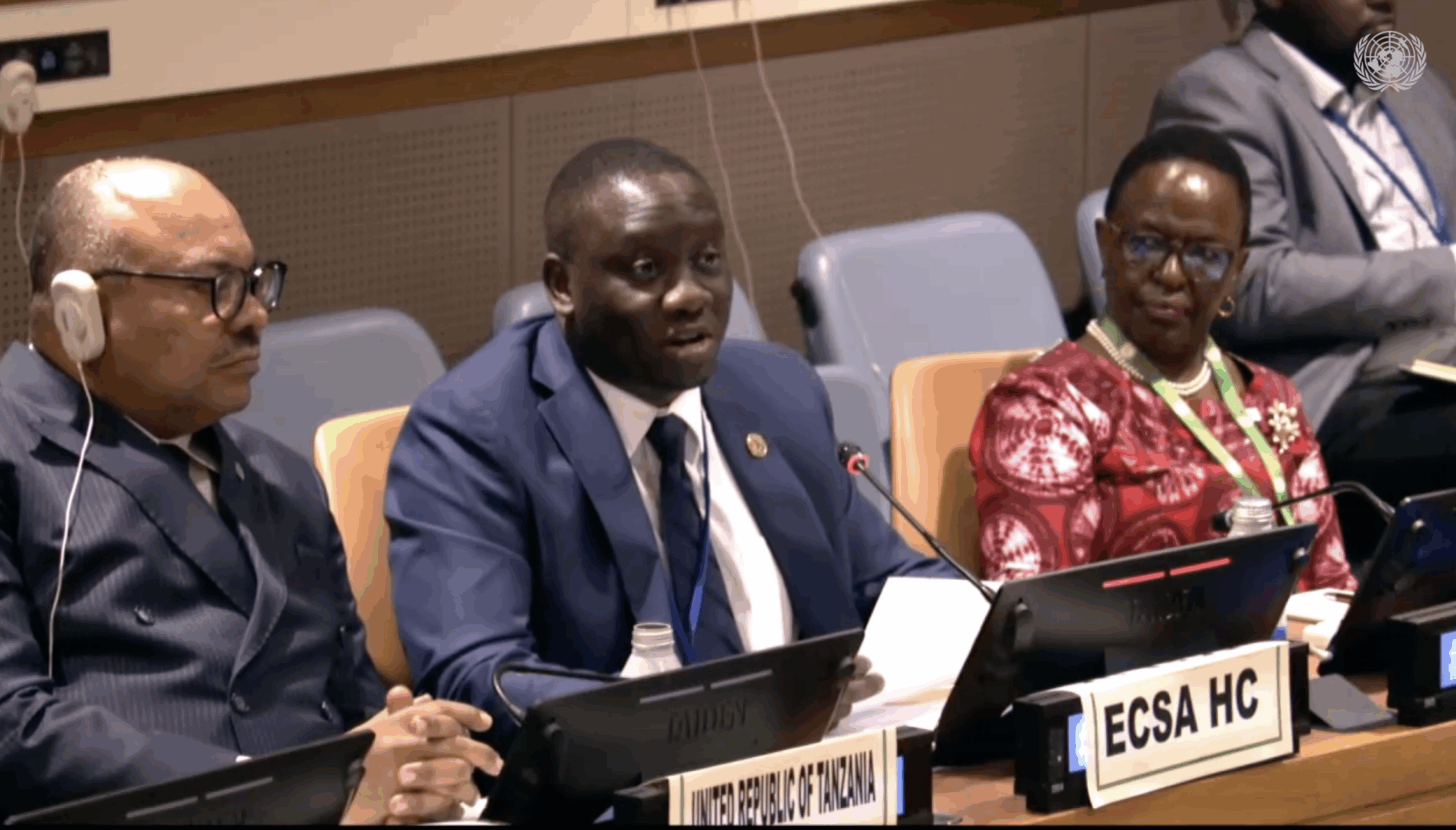
The East, Central, and Southern Africa Health Community (ECSA-HC) proudly marked a historic milestone at the 80th United Nations General Assembly (UNGA80) by convening a high-level side event on Science Diplomacy, organized in collaboration with the Muhimbili University of Health and Allied Sciences (MUHAS).
For ECSA-HC, hosting this dialogue was more than a duty; it was a bold statement of Africa’s determination to take its rightful place at the center of global health research and innovation. It underscored the organization’s ambition to amplify African voices, mobilize global solidarity, and chart a future where African science drives solutions to both local and global health challenges.
In his keynote address, ECSA-HC Director General Dr. Ntuli Kapologwe issued a powerful call to action, reminding the world that Africa carries 25 percent of the global disease burden yet contributes less than two percent of scientific publications and receives under one percent of worldwide R&D funding.
“Science is not optional in health governance and prosperity. It is the bedrock of resilience, the driver of discovery, and the heartbeat of equity,” he said.
Dr. Kapologwe also unveiled one of ECSA-HC’s most ambitious initiatives to date the establishment of a Regional Centre of Excellence for Science, Research, and Innovation in Arusha, Tanzania, on 28 acres of land allocated by the Government of Tanzania.
The Centre will serve as a continental hub for cutting-edge research in digital health, artificial intelligence, biotechnology, and science-policy linkages, while training and retaining African talent.
“Our vision is clear: a future where Africa contributes to the global health agenda using African data, African talent, and African tools,” he affirmed.
Regional and global leaders echoed this message, stressing Africa’s potential to lead in science and health innovation. H.E. Workneh Gebeyehu, Executive Secretary of IGAD, urged stronger cross-border collaboration, emphasizing that regional institutions are uniquely positioned to harmonize strategies, bridge gaps, and ensure that no one is left behind.
He warned of the dangers of Africa’s reliance on imported medicines, with nearly 70 percent of essential supplies sourced externally, and called for homegrown innovations to safeguard lives.
H.E. Veronica Nduva, Secretary General of the East African Community (EAC), highlighted the importance of harmonizing health research and strengthening data governance, including building shared scientific infrastructure.
Adding a financial perspective, Mr. Zitto Alfayo from AfriExim underscored that sustainable financing is the backbone of Africa’s scientific renaissance, stressing that investing in African-led research is about building Africa’s own future and reaffirming AfriExim’s commitment to supporting such investments
.
Dr. Kapologwe advanced a bold five-point call to action for governments, partners, and the private sector. He urged equitable investment in Africa’s research ecosystems, the launch of a Global Health Research Compact rooted in fairness and shared ownership, the institutionalization of African science-policy voices within the UN system, the mobilization of innovative domestic financing for health research and development, and the urgent establishment of pan-African data systems for real-time surveillance and decision-making.
“This is not about aid,” he emphasized. “It is an investment in global resilience, stability, and equity that drives inclusive advancement in health science.”
The moderator, Prof. Ntobeko Ntusi, President and CEO of the South African Medical Research Council, summarized the dialogue with four critical takeaways: the centrality of partnerships and collaboration, the importance of data sovereignty and governance, the need for innovative financing for development collaboration, and the urgency of using digital applications and AI to enhance research and development.
The session closed with remarks from Hon. Mahmoud Thabit Kombo, Minister for Foreign Affairs and East African Cooperation of the United Republic of Tanzania, who represented Vice President Dr. Philip Isdor Mpango as the Guest of Honor.
He called for deeper collaboration between governments, non-state actors, and the private sector, stressing that science must remain central to Africa’s solutions. “Partnerships beyond government are essential, and science provides the compass to navigate the complex challenges of our time,” he said.
For ECSA-HC, organizing this event was more than hosting a side discussion; it was about setting a new benchmark in African-led collaboration and showcasing Africa’s determination to move from the margins of science to its center.
As Dr. Kapologwe concluded, “Together, we can build a world where no region is left behind in discovery, innovation, or impact. That future is within our reach, if we choose it.”
The Science Diplomacy side event at UNGA80 has made one thing clear: the future of global health depends on Africa’s leadership in science, research, and innovation.
Related News